Tomorrow, November 26, I’ll be delivering a public lecture at the University of Victoria’s Centre for Studies in Religion and Society, exploring the historical connections between the John Birch Society, Christian nationalism, conspiracy politics, and contemporary political movements, including Project 2025.
The talk examines how political strategies and ideas once associated with the fringes of American conservatism have influenced contemporary political and religious movements.
Time: 5:00 PM Pacific / 8:00 PM Eastern Location: University of Victoria, MAC D282 Attendance: In person or online
Moses Znaimer’s ZoomerMedia has announced plans to bring Ezra Levant’s Rebel News to conventional Canadian television, with proposed weekday prime-time broadcasts on JoyTV and FaithTV beginning in January 2027.
In my latest article for The Cult Following, I examine the historical relationship between Levant, Znaimer, and Sun News Network, the Canadian conservative-oriented television channel that closed in 2015.
The article also explores Rebel News’ history of political advocacy, controversial editorial practices, and the regulatory questions surrounding its entry into licensed Canadian broadcasting.
Drawing on federal court decisions, Canadian Radio-television and Telecommunications Commission (CRTC) regulations, media audience research, and historical reporting, the piece examines what happens when alternative online media moves into conventional television.
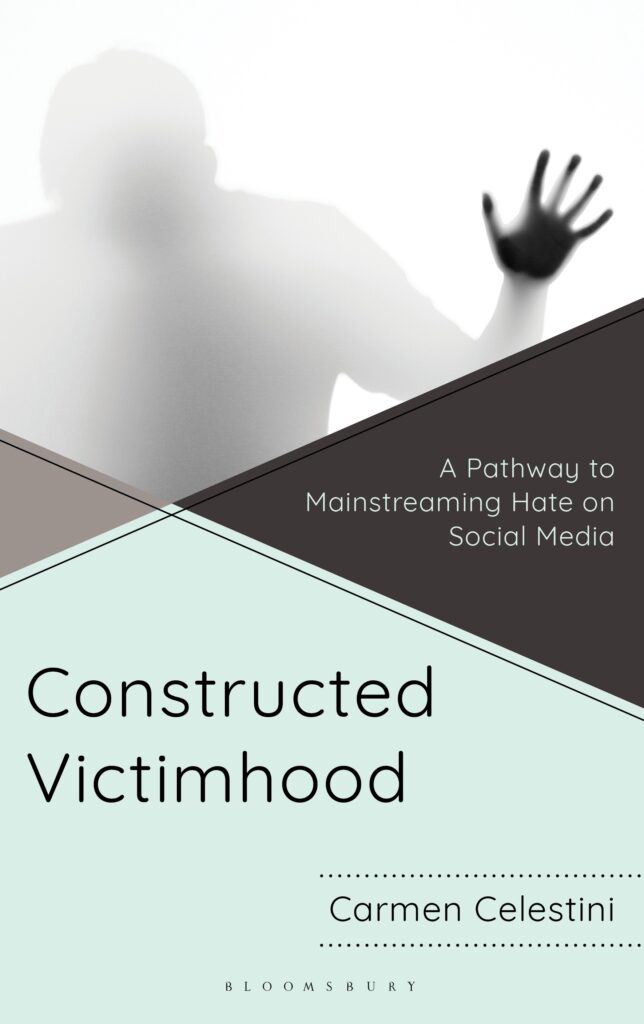
My new book, Constructed Victimhood: A Pathway to Mainstreaming Hate on Social Media, is published by Bloomsbury Academic on November 12, 2026.
The book examines how narratives of grievance, persecution, and perceived loss can help exclusionary and hateful ideas move from online communities into wider public and political debate. With Canada at its center, it traces connections across conspiracy theories, Christian nationalism, the manosphere, anti-woke politics, and extremist mobilization, asking what persisted from pandemic-era networks and the Freedom Convoy into the years that followed.
Rather than treating these communities as one unified movement, Constructed Victimhood considers the ways overlapping accounts of injury, blame, and restoration travel across different ideological and organizational settings. It asks how demands framed as protection, fairness, or resistance can give extremist ideas broader political appeal.
What happens when political leaders who build their identities around persecution acquire institutional power?
In my latest essay, I examine a video shared by Donald Trump featuring Pete Hegseth, whose rhetoric combines claims of political persecution with promises of strength, patriotism, and victory over perceived enemies.
This combination of victimhood and heroism is familiar from my research into Canadian far-right and conspiracy communities. Individuals and movements present themselves as victims of political, cultural, and religious persecution while simultaneously claiming the heroic responsibility of defending the nation.
Drawing on research conducted during my postdoctoral fellowship with The Disinformation Project at Simon Fraser University, I explore how these narratives construct collective political identities, justify hostility toward perceived enemies, and contribute to political mobilization.
I will be delivering an invited lecture, Divine Fury: God’s Angry Men and Their Political Playbook, hosted by the Centre for Studies in Religion and Society at the University of Victoria as part of its Scholars in the Square series.
Drawing on my book God’s Angry Men: The Political Legacy of the John Birch Society, this presentation examines the role of the John Birch Society in developing political strategies and ideological frameworks that continue to shape contemporary American politics.
Although frequently characterized as a fringe conspiratorial organization, the John Birch Society played an important role in advancing political networks and narratives that combined Christian nationalism, anti-communism, cultural grievance, and distrust of democratic institutions.
The lecture explores the Society’s political legacy, including connections to the Council for National Policy, the Heritage Foundation, and the ideological environment surrounding Project 2025.
By examining these historical continuities, the presentation considers how conspiracy theories, religious nationalism, and political grievance have helped reshape contemporary political discourse and institutional power.
Event details
Date: Thursday, November 26, 2026
Time: 5:00–6:00 p.m. Pacific Time
Location: MacLaurin D-Wing, Room 282, University of Victoria
Host: Centre for Studies in Religion and Society, University of Victoria
What happens when a political movement convinced of its widespread support suffers an electoral defeat?
In my latest article for The Cult Following, I examine the conspiracy theories that circulated among Alberta separatist supporters following the October 19 referendum results.
Drawing on examples from Facebook, Telegram, and X, the article explores allegations involving electoral fraud, Dominion voting machines, political interference, and ineligible voters. It also considers how online echo chambers can create distorted perceptions of political support.
Central to the analysis is the concept of constructed victimhood: the process through which perceived grievances and political setbacks become evidence of persecution, reinforcing collective identity and sustaining political mobilization.`
The article situates these responses within broader patterns of conspiracy belief, anti-immigration rhetoric, institutional distrust, and far-right political movements in Canada.
On October 19, 2026, I participated in a panel discussion titled Christian Nationalism in Canada, alongside David O’Reilly and Sarah Wilkins-Laflamme.
The event was hosted by the Institute for Religion, Culture and Societal Futures at St. Jerome’s University.
Christian nationalism has received considerable scholarly and public attention in the United States. However, the intersections of religious identity, nationalism, and political power also warrant close examination within Canada.
My research explores Christian nationalism and its relationships with political extremism, conspiracy theories, grievance-based movements, and the broader religious right. An important aspect of this work is understanding the distinct Canadian context, including the histories, political conditions, and networks through which these movements develop and gain influence.
Public discussions such as this panel provide opportunities to bring academic research into broader conversations about religion, politics, and Canadian society.
Watch the full panel discussion:
Event: Christian Nationalism in Canada Date: October 19, 2026 Panelists: Carmen Celestini, David O’Reilly, Sarah Wilkins-Laflamme Host: Institute for Religion, Culture and Societal Futures, St. Jerome’s University
In my latest Substack essay, “What Happens When Propaganda Talks Back?”I examine how conversational artificial intelligence may change the ways extremist ideologies and conspiracy theories are communicated and experienced.
Drawing on reporting about the neo-Nazi chatbot MechaHitler, research into human AI relationships and political persuasion, and my own exploratory experience with AI-generated conspiracy content, I consider how personalization, apparent companionship, and ideological validation could alter the relationship between extremist messaging and its audiences.
The essay also connects these developments to my ongoing research into conspiracy theories and enchantment, asking whether the appeal of hidden knowledge might increasingly become intertwined with the relationship users develop with an artificial conversational partner.
While existing research does not establish that extremist AI chatbots cause radicalization, the essay identifies important questions about the future of propaganda, technological intimacy, and ideological influence.
I was interviewed for CBC’s The Fifth Estate investigation, “The Sovereign Swindle,” examining sovereign-citizen ideology and how individuals allegedly exploited weaknesses in the Canada Revenue Agency’s systems to obtain millions of dollars in tax refunds.
Drawing on my research into conspiracy theories, sovereign-citizen movements, and the relationship between alternative belief systems and political authority, I discussed the ideological foundations of sovereign citizenship, including beliefs about government legitimacy, individual sovereignty, and supposed secret financial accounts.
Throughout the documentary, I help to explain how these beliefs shape adherents’ interpretations of government institutions, how some individuals may move toward more extreme actions, and why apparent successes can reinforce conspiratorial worldviews.
The investigation also examines the broader international sovereign-citizen movement and raises questions about institutional vulnerability, public accountability, and the consequences of pseudolegal beliefs.
Watch the full documentary:
The Fifth Estate: The Sovereign Swindle premiered on YouTube on October 15, 2026, and airs on CBC Television and CBC Gem on October 16 at 9 p.m. local time.